Are you using AI responsibly? (Most people aren't)

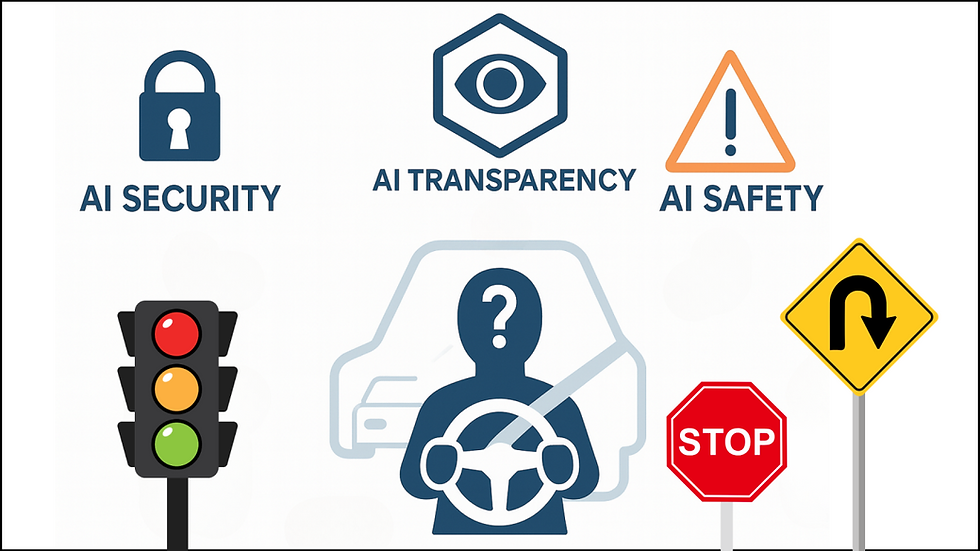
You got a new car.
Yes, you! Imagine how long you've wanted a chance like that—to move around, discover new places, meet new people.
But there's a problem, and it's pretty big: you don't know how to drive.
You get the keys, look at them, and think: what now?
We all know what happens when someone who hasn't learned the rules, risks, and responsibilities gets behind the wheel. It's genuinely dangerous. People get hurt.
That's why we learn and need a license before we drive.
What does this have to do with AI? Everything.
Like driving, using AI carelessly - without understanding its risks - can cause real individual and societal harm.
Two years ago, when colleagues introduced me to ChatGPT, everything changed for me. I immediately realized I was facing a tool with enormous possibilities. But at that time, Large Language Models - the type of artificial intelligence model designed to understand and generate human language behind ChatGPT and many other generative AI interfaces - were still full of hiccups, far from their current processing capacities. Going back to the car analogy, they were like a small car with a limited speed range.
Here's the big thing: months in AI development are almost like decades in other technological revolutions. All the elements connected to artificial intelligence have now reached a high level of expertise, speed, and processing power that are alarming enough for people to understand the main risks.
That's why I decided to write a series of four texts highlighting what I believe are the crucial elements to know before exploring AI tools. I divided them into four crucial questions:
1. Is generative AI safe? Privacy issues and brain impact
2. Is it legal? Regulations, copyright, resources
3. Is it ethical? Originality and transparency
4. Is it good? Trust, bias, and hallucinations
But let me be honest with you: I am not an AI expert. I am writing from the perspective of a curious, experimental, day-to-day user and researcher of AI tool development. New elements are being added to the discussion every day, so please don't expect me to provide conclusive answers to everything. I am simply sharing what I know with you. Period.
With these questions addressed, I believe everyone will be able to start their AI journey carefully, mindful of the main risks and aware of what needs to be regulated to ensure humanity is protected and preserved (especially the most vulnerable communities).
Think of it as the 'driver's license' we need before starting our journey with AI. Just as we learn to drive properly—with guidance, practice, and healthy respect—we can harness this tool while preserving our humanity.
Disclaimer: This text had grammar and readability revised using Anthropic LLM Claude.


Comments